Contents
- Introduction
- The Ship Walpole and the 1738 Migration
- Augusta County Importation Oaths and Early Settlers
- Robert Gwinn’s Probable Arrival in Virginia
- The Ulster Origins of Patton’s “Thirty-Six Families”
- Presbyterian Records of the Laggan Valley
- Townlands and the Gwinn Family in Donegal
- The 1740 Protestant Householders Returns
- Continuing Research Resources
- Conclusion
- Consolidated References
Introduction
My 1st cousin Nelson Gwinn, sister Leona, and other descendants of George Loomis Gwinn traced their forebearers back to a Robert Gwinn who arrived in Virgina in August 1738. In Welsh, the name Gwyn translates to "white," "fair," "pure," "bright," or "blessed". It stems from the Old Welsh word gwyn and was traditionally used as a masculine name or a nickname for someone with a pale complexion or light hair. It has been variously rendered in English as "Gwyn," "Gwynne," "Guin," "Gwin," or "Gwinn." Largely due to the origin of the name, it has been assumed that our family migrated to America from Wales. Only recently I have begun to question that assumption, partly due to my DNA result: 33% Scotland, 19% Ireland, 12% England and NW Europe, and only 9% Welsh. This result spured me to investigate further into Robert Gwinn's origins. With the help of ChatGPT AI, I discovered that Robert more likely came to Virginia from Northern Ireland. Although no surviving passenger manifest exists for the 1738 voyage of the ship Walpole, substantial circumstantial evidence places Robert Gwinn among the families recruited by Colonel James Patton for settlement in the Shenandoah Valley and adjacent frontier lands. Some evidence for this theory is consolidated below.
This paper consolidates a series of research notes concerning:
- The 1738 voyage of the Walpole
- James Patton’s organized migration scheme
- The settlement of Beverley Manor and Augusta County
- The probable origins of Robert Gwinn in Ulster
- Presbyterian and civil records in County Donegal and County Derry
- The surviving 1740 Protestant Householders Returns
- Sources for continued Gwinn family research
All citations from the original research sets have been consolidated into a single reference section.
The Ship Walpole and the 1738 Migration
The ship Walpole, captained by Colonel James Patton, sailed from Whitehaven in 1738 and arrived in Virginia on August 26 of that year. The voyage has become historically significant because it transported a large body of Ulster-Scots settlers who would later populate Augusta County and the Shenandoah Valley.
Although a complete passenger manifest has not survived, surviving letters, court records, importation claims, land transactions, and later family histories identify a core migration group consisting of approximately thirty-six families, or roughly sixty-five individuals.
Among the best-documented passengers were members of the Patton and Preston families:
- Colonel James Patton
- Elizabeth Patton Preston
- John Preston
- William Preston
- Letitia Preston
- Margaret Preston
- Mary Preston
- Alexander Breckinridge and wife Jane Preston Breckinridge
The migration also included numerous prospective settlers and indentured servants who were recruited to populate frontier lands associated with the Beverley Manor grant.
The Walpole was owned by merchant Walter Lutwidge and sailed from Whitehaven after passengers assembled through recruitment networks centered in Ulster.
Patton’s purpose was both economic and strategic. Acting in conjunction with William Beverley, he recruited Scots-Irish Presbyterian families to settle more than 100,000 acres of frontier land in western Virginia.
Augusta County Importation Oaths and Early Settlers
Importation oaths taken in Augusta County between 1739 and 1740 provide some of the strongest surviving evidence regarding the Walpole migration.
Known family groups associated with Patton’s migration include:
- Patton
- Preston
- Breckinridge
- Barger
- Anderson
- Bell
- Brown
- Campbell
- Hays/Hayes
- Hutchison
- Johnston/Johnson
- Kerr
- Logan
- McCune
- Poage
- Stuart
- Thompson
Robert Gwinn’s Probable Arrival in Virginia
On August 26, 1738, Captain James Patton's ship Walpole was recorded as arriving in Virginia from Whitehaven. The surviving record is among the South Potomac shipping returns. Later Preston family tradition places the immigrants' landing at Belle Haven near present-day Alexandria, while another historical tradition places it at Hobb's Hole, present-day Tappahannock. No contemporary evidence examined thus far conclusively identifies the precise place where the passengers disembarked. Although Robert Gwinn does not appear on a surviving ship manifest, genealogical evidence strongly suggests that he arrived aboard the Walpole in 1738 as part of James Patton’s migration scheme.
Most modern reconstructions place Robert Gwinn’s birth around 1715 in Ulster, probably in present-day County Donegal or nearby portions of County Derry.
Earlier theories proposing Welsh origins have largely been displaced by modern Y-DNA studies. Genetic testing of documented descendants places the Gwinn line within the R-M222 haplotype, commonly called the Northwest Irish Modal Haplotype, associated historically with the Ui Neill dynasties of northwestern Ireland.
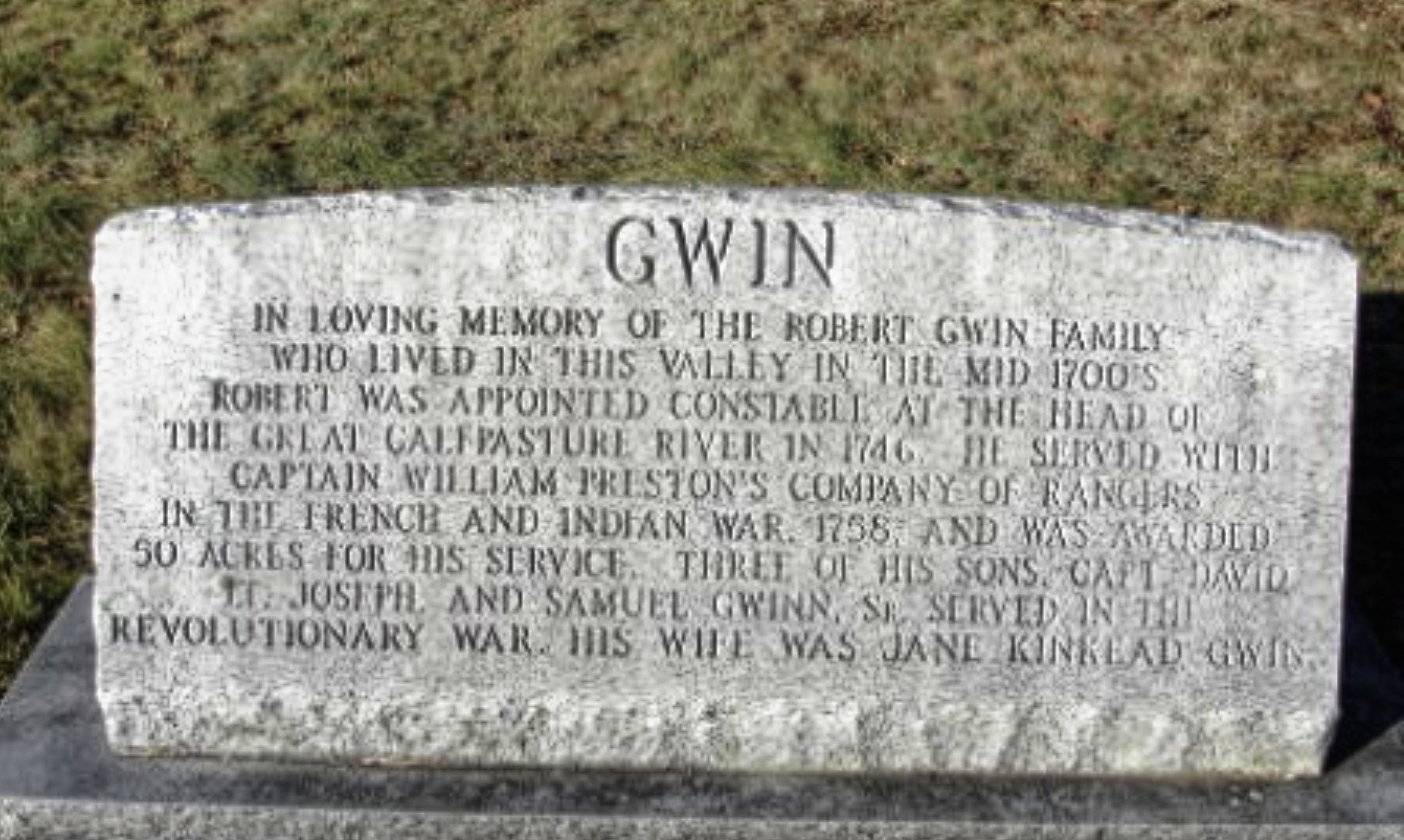
By 1745 Robert Gwinn had established himself in the Calfpasture region of Augusta County. On July 16, 1745, he purchased 544 acres on the Great Calf Pasture River from James Patton and John Lewis for five shillings. View Original Deed
Robert Gwinn married Jane (Jean) Kincaid or Kinkead and became an active participant in frontier affairs. In 1746 he served as constable at the headwaters of the Great Calf Pasture River. During the French and Indian War he served as a ranger in Captain William Preston’s company.
The Ulster Origins of Patton’s “Thirty-Six Families”
James Patton’s recruitment efforts focused heavily on the Laggan Valley region spanning eastern County Donegal and western County Derry.
Raymochy Parish (Ramoigh)
This parish formed the core of the Patton family network. Families recruited here were often neighbors, kin, or fellow Presbyterians.
Burt Parish
Burt was a major Presbyterian stronghold in the Laggan Valley and appears repeatedly in connection with families who later settled Augusta County.
Templemore Parish and the Derry Area
Patton had strong personal and commercial connections in the Derry region.
Presbyterian Records of the Laggan Valley
Burt Presbyterian Church
The Kirk Session Book covering 1676–1719 is among the oldest surviving Presbyterian records in Ireland. Researchers examining Gwinn ancestry are encouraged to search for surname variants including:
- Gwin
- Gwinn
- Guin
- Gwyn
- McGuinn
Townlands and the Gwinn Family in Donegal
Historical and genetic evidence strongly links the Gwinn family to eastern County Donegal and the Inishowen Peninsula.
Burt Parish
- Carrowreagh
- Burt
- Tullydish
Raymochy Parish
- Manorcunningham
- Ray
- Ardagh
The 1740 Protestant Householders Returns
One of the most important surviving records for the region is the 1740 Protestant Householders Return.
Clonmany Parish
- James Guin
- John Guin
- Owen Guin
Donagh Parish
- John Guin
- William Guin
Continuing Research Resources
- Chronicles of the Scotch-Irish Settlement in Virginia by Lyman Chalkley
- Augusta County court records
- Beverley Manor land grants
- Presbyterian session records from Burt and Monreagh
- Registry of Deeds memorials in Ireland
- Protestant Householders Returns
- DNA studies of Gwinn descendants
Conclusion
Although definitive documentary proof placing Robert Gwinn aboard the Walpole has not survived, the cumulative evidence is persuasive.
The convergence of:
- settlement chronology,
- land transactions,
- migration patterns,
- association with James Patton,
- Ulster Presbyterian geography,
- Augusta County records,
- and modern DNA evidence
all strongly support the conclusion that Robert Gwinn belonged to the organized Scots-Irish migration led by James Patton in 1738.
The surviving records reveal not merely an isolated immigrant, but a member of a tightly connected community transplanted from the Laggan Valley of Ulster to what was then the colonial frontier in Virginia's Shenandoah Valley'.
Consolidated References
- Virginia Library of Virginia biographical entry for James Patton.
- Wikipedia article: “James Patton (Virginia colonist).”
- RootsWeb and SWVA genealogy archives relating to James Patton and Augusta County settlers.
- Augusta County and Beverley Manor settlement records.
- Smithfield Review articles concerning James Patton and frontier settlement.
- FamilySearch catalog entries relating to Beverley Manor and Augusta County.
- Virginia Places historical essays concerning Beverley Manor.
- Lyman Chalkley, Chronicles of the Scotch-Irish Settlement in Virginia.
- FamilySearch and FindAGrave entries for Robert Gwinn.
- https://ancestors.familysearch.org/en/LCV5-QVR/samuel-gwinn-i-1754-1839
- Wikitree entries for Gwinn family descendants.
- Donegal Genealogy Resources: Protestant Householders Returns.
- Burt Presbyterian Church historical records.
- Laggan Presbytery historical materials.
- Ulster Historical Foundation databases.
- DNA studies and genealogical summaries hosted through Gwinn family RootsWeb archives.
- Discover Ulster Scots historical resources.
- Registry of Deeds and Irish parish record collections.
- Internet Archive digitizations of genealogical and Presbyterian historical works.
- UPenn Online Books Page references to Chalkley’s works.
- Additional genealogical databases including VGS maps, county settlement indexes, and Augusta County abstracts.
Prepared from consolidated research notes and source extracts concerning the Robert Gwinn family and the 1738 Ulster-to-Virginia migration.