Contents
Introduction
These pages constitute the principle substance of this website. It is not a family tree and it does not cover any branches other than the one that leads from Robert (~1714-1785) to my father, Leonard Cyrus Gwinn (1900-1950), and his progeny. Much of the information herein is gleaned from my sister's book "The Gwinns of Round Bottom (ISBN 9798988801719)," published by her son Tom in September 2023. Her book is available at Amazon. I wish I had more information on the generations between Robert and Leonard: Samuel (1745-1839), John (1790-1873), Laban (1898-1900), and George Loomis (1861-1927). I am sure that a good deal more could be discovered about Samuel, John, and Laban, but I simply have not taken the time to do the research, some of which would require travel that would be difficult to attempt.
Samuel's birth date differs in the various records, but is likely to have been in about 1754, very probably at his father's home on the Calfpasture river near Deerfield, Virginia. He was Robert's fifth child. Records show that he served under Captain Lockridge in 1771 and 1774. In 1776, he moved to a location on the Greenbriar River, near present day Lowell, Summers County, WV. There is tenuous evidence that some members of the Graham family moved with him. Samuel first married Elizabeth Speece; after Elizibeth passed away, He married Elizabeth Lockridge. Samuel had nine children, the first two (Moses and Samuel II) likely with Elizabeth Speece and the rest with Elizabeth Lockridge: Moses Gwinn (1774-1822), Samuel Gwinn II (1777-1863), Ruth Lockridge Gwinn(1783-1862), Jane Gwinn (1787-1851), Andrew Herbert Gwinn (1788-1863), John Gwinn (1789-1870), Elizabeth Gwinn (1791-1849), Isabelle Ivy Gwinn (1793-1852), and Ephraim James Gwinn (1799-1887). The first patent of land to Samuel in Summers County was in 1796. In 1800, he moved from Lowell to Green Sulphur Springs where he died in ~1848 at age 94. From my sister Leona's book "The Gwinns of Rount Bottom": Frederick Long writes: "Samuel Gwinn Sr. became a prosperous farmer and was known to be an honest, upright man. At the time of his death, through hard work and unyielding effort, his farm in Green Sulphur Springs became one of the most, if not the most valuable land in what is now Summers County." By 1816, Long said, he bought four tracts of land on Lick Creek, one over 28,000 acres.
John: Samuel's son John was born in Green Sulpher Springs, married Sarah "Sally" Gwinn, and had 11 children: Francena, Lockridge, Sidney, Eldridge, Breckenridge, Cynthia, Achsah, Samuel, William, John, and Laban. From Leona's book: John followed in his father's footsteps and acquired many acres of land in what would be Fayette and Summers Counties. One of these was "one certain tract of land in the county of Fayette containing 230 acres, lying on New River and known as the round bottom tract," which he bought from Isaac and Elizabeth Sanner in April of 1855. This was the tract of land to which his son, Laban, would later bring his bride, Mary Jane Burdette.
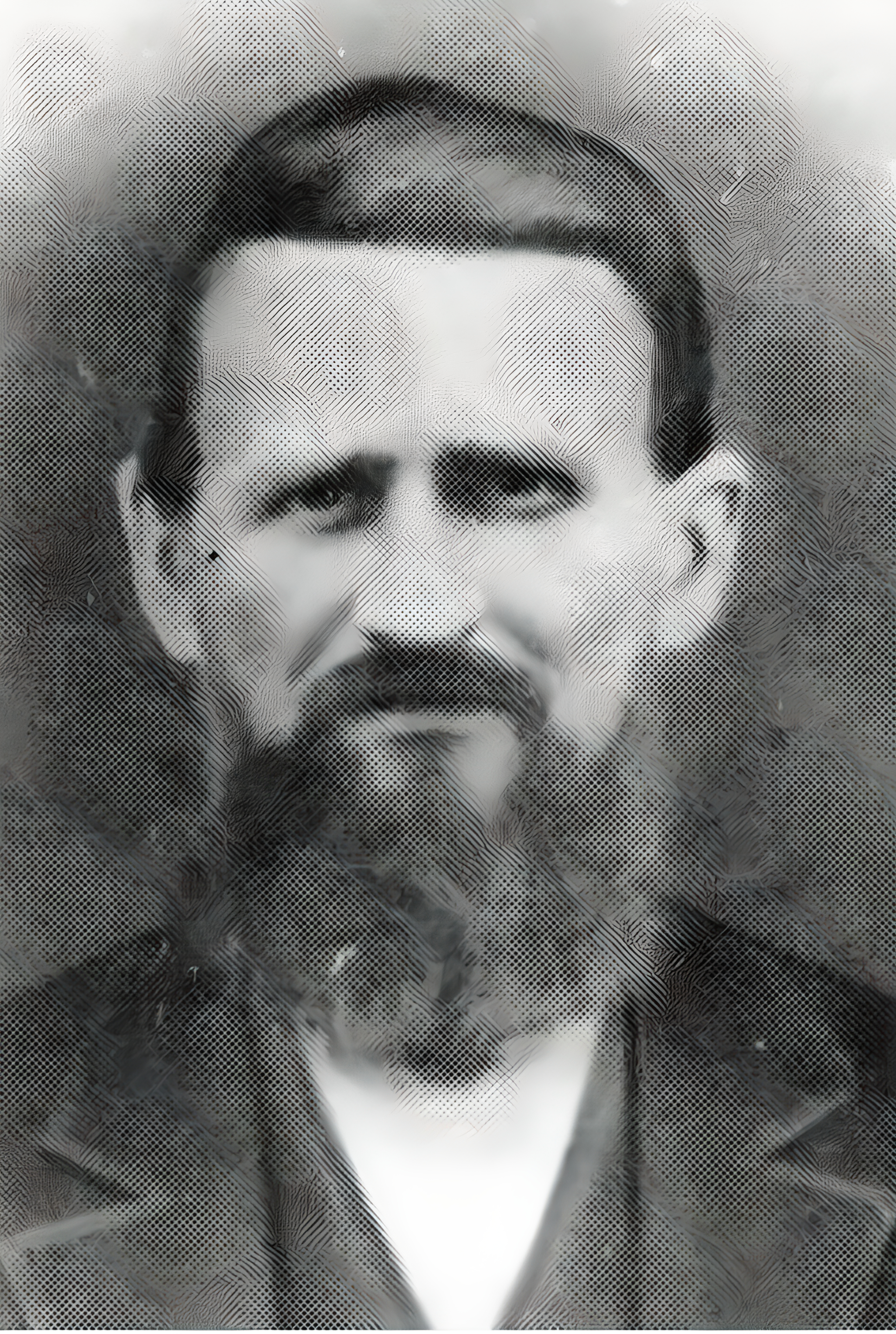
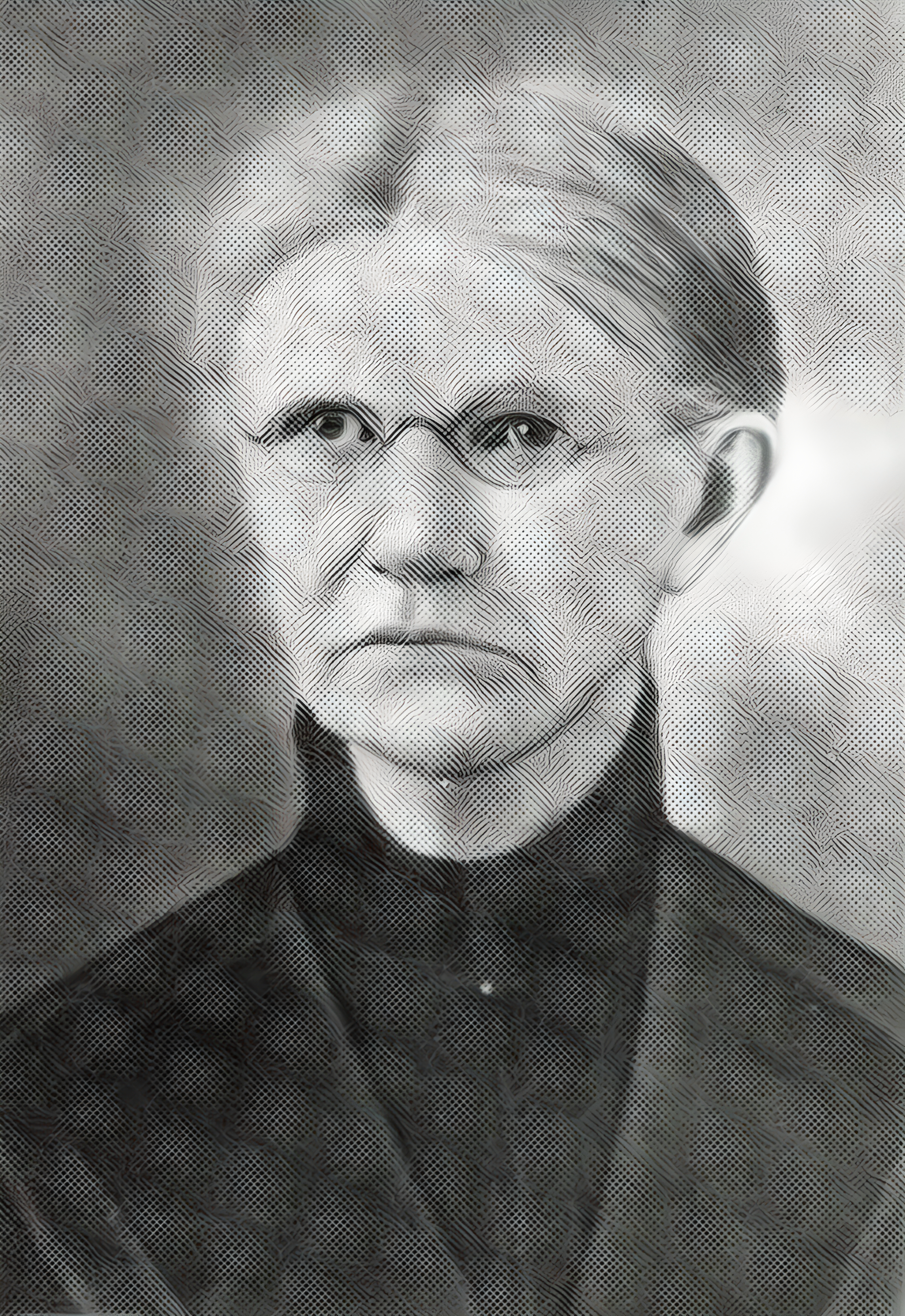
Laban: In January of 1861, John Gwinn sold the round bottom property to Laban for $1,000. He built a house and barn there and began to farm, but life was interrupted by the Civil War. Laban was a solid Union man, and when he was warned that Confederate troops were coming to arrest him, he and his family fled to Indiana. His house and barn were burned to the ground. This story is covered in detail in my sister's book. Laban returned to Round Bottom after the war and rebuilt his home. Before his death in 1900, Laban divided the Round Bottom tract between his three sons, John, Lewis and George Loomis.
George Loomis: George Loomis was able to read blueprints, calculate the number of board feet in a stand of timber, keep books, and operate a business. Beyond that, he was a skilled carpenter, a musician, and apparently also wrote poetry. In the early 1900s, he built a large, fine house where he and Rosa raised six sons and five daughters, one of which was my father, Leonard. As told in my sister's book, The house that Loomis Gwinn built, of lumber sawed from his own trees at his own sawmill, was spacious and well-planned. The floors and interior trim, including tongue-in-groove wainscoting and mantels for the three fireplaces, were all of hardwood. Each fireplace had an opening at the back of the hearth through which ashes could be swept to fall to the basement and be removed via an opening in the flue, so that they did not have to be carried through the house. In the full basement was a hand-dug well, from which water was brought up to the kitchen by means of a hand pump. A carbid gas system, buried under ground, with gas piped to fixtures in the house, furnished light at night.
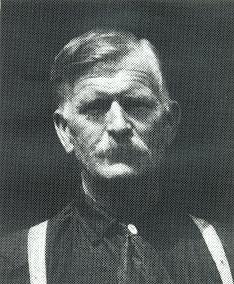
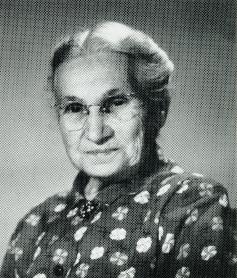
Around the front and one side of the house was a wide veranda, its roof supported by round columns, with a railing between. At the top of the wide concrete steps leading to the porch, two doors led to the interior of the house. The door straight ahead led to a sitting room, or family room, where a cherry-mantled fireplace, with a large mirror above it, provided warmth and cheer in the cooler months. The family usually gathered here in the evening to read, work, play, listen to the wind-up victrola, or talk. The door to the right of the front steps, seldom used, opened to a foyer and hallway. To the right off the foyer was the parlor, used only for special company, weddings, or funerals. The parlor was furnished with dark, leather-upholstered furniture, and held an ornate, mirrored, parlor organ. At the end of the hallway to the rear of the house was the spacious dining room, containing a china cupboard and the 12-foot table which Loomis built himself, to seat the twenty or more people who were present for three meals a day. After this house was finished, Loomis built another, smaller house a short distancce away. This was to be the home of Rosa's parents, Emma and William Spade, who came from Monroe County to live near their daughter after William suffered a stroke.
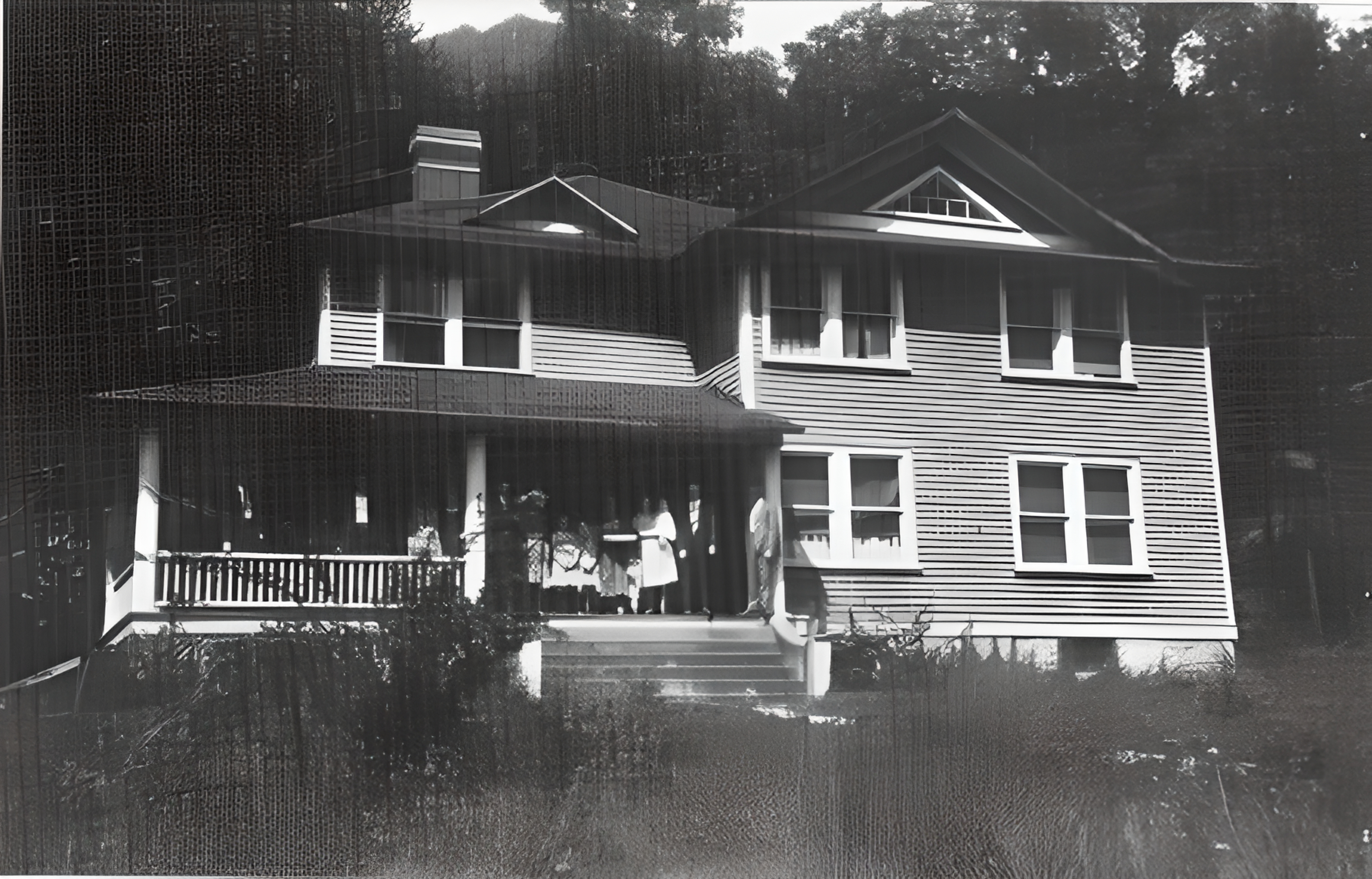
I was fortunate to be able to visit Round Bottom while the house was still there. I have faint, yet fond memories of those visits. The house was impressive and seemed huge to me as a toddler. I remember an extensive watermelon patch between the house and the river. At night, in the house with family, we watched the side of the mountain for the headlights of a car that we were expecting to arrive with more family members. We could only catch brief glimpses of the headlights as it wound down the steep mountainside with hairpin curves. It was a dirt road, not wide enough for two vehicles. My grandfather Loomis passed away long before I was born, but I knew my grandmother Rosa well. She was an elegant, intelligent, loving woman who lived to 1962, two years after I enlisted in the Air Force.
The Leonard Gwinn Family:
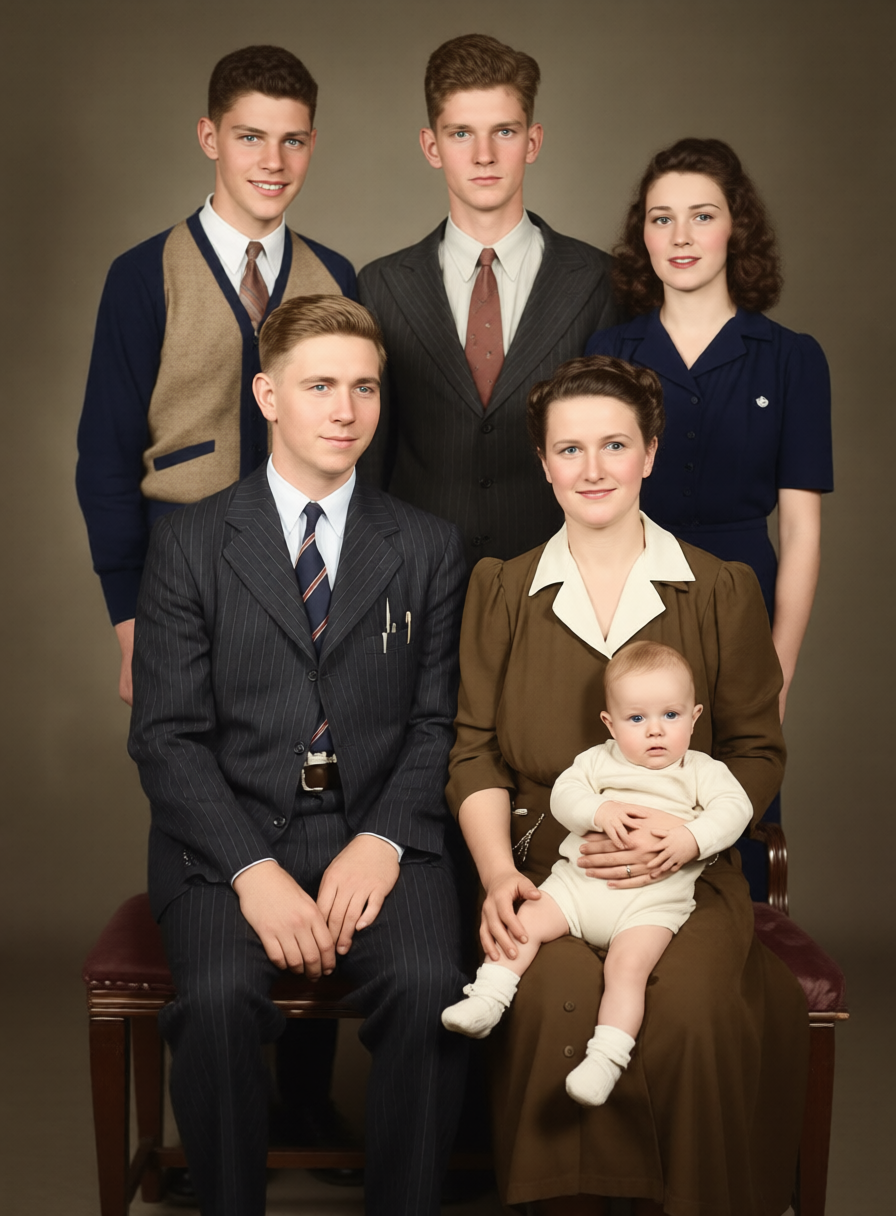
As well as an extraordinary teacher, my sister Leona was also a gifted writer. She submitted several articles to the Goldenseal Magazine, published by the Mountain Arts Foundation via the state Division of Culture & History.
Much of the following information has been lifted from her book "The Gwinns of Round Bottom," from her Goldenseal articles, and from letters. There is also a memoir that she began writing but did not complete. It details the life of the Leonard Gwinn family from her parents marriage up to 1985. Leona's Unfinished Memoir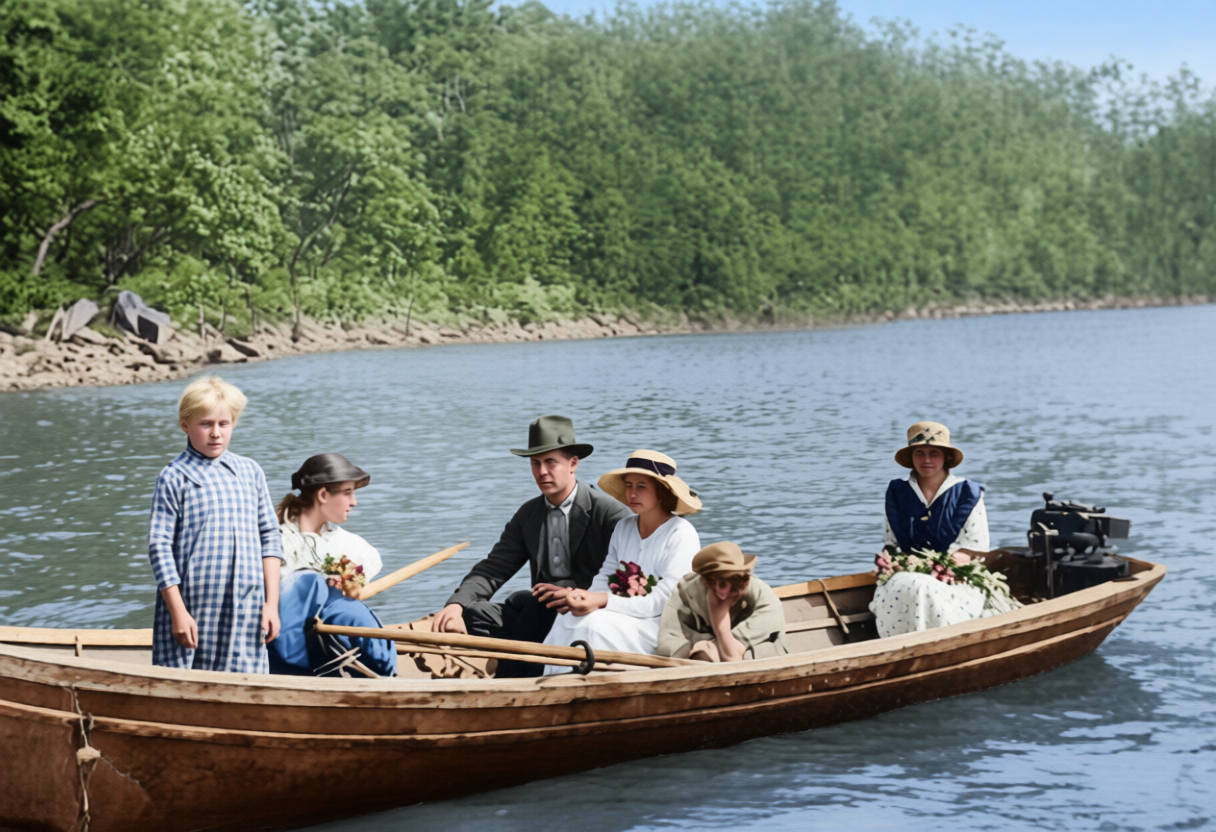
My father Leonard was born in 1900 at McKendree. I don't know if he was born at home, in the house at Round Bottom, or in the hospital across the river. He was a student of Miss Gertrude Skaggs and, due to her influence, enrolled in the Alderson Baptist Academy (ABA), a boarding school. After three years there, he returned home due to his father's illness. He finished school at Oak Hill High School, graduating in 1923. He met Minnie Ray while at the ABA and they were married in Renick, WV on February 16th, 1924. Their first "home" was at the McKendree House, a boarding house next to the store owned by George Loomis Gwinn. Leonard taught school, managed the boarding house, and helped his father in the store. The boarding House burned down in 1925, so mom & dad moved into the big house across the river at Round Bottom.
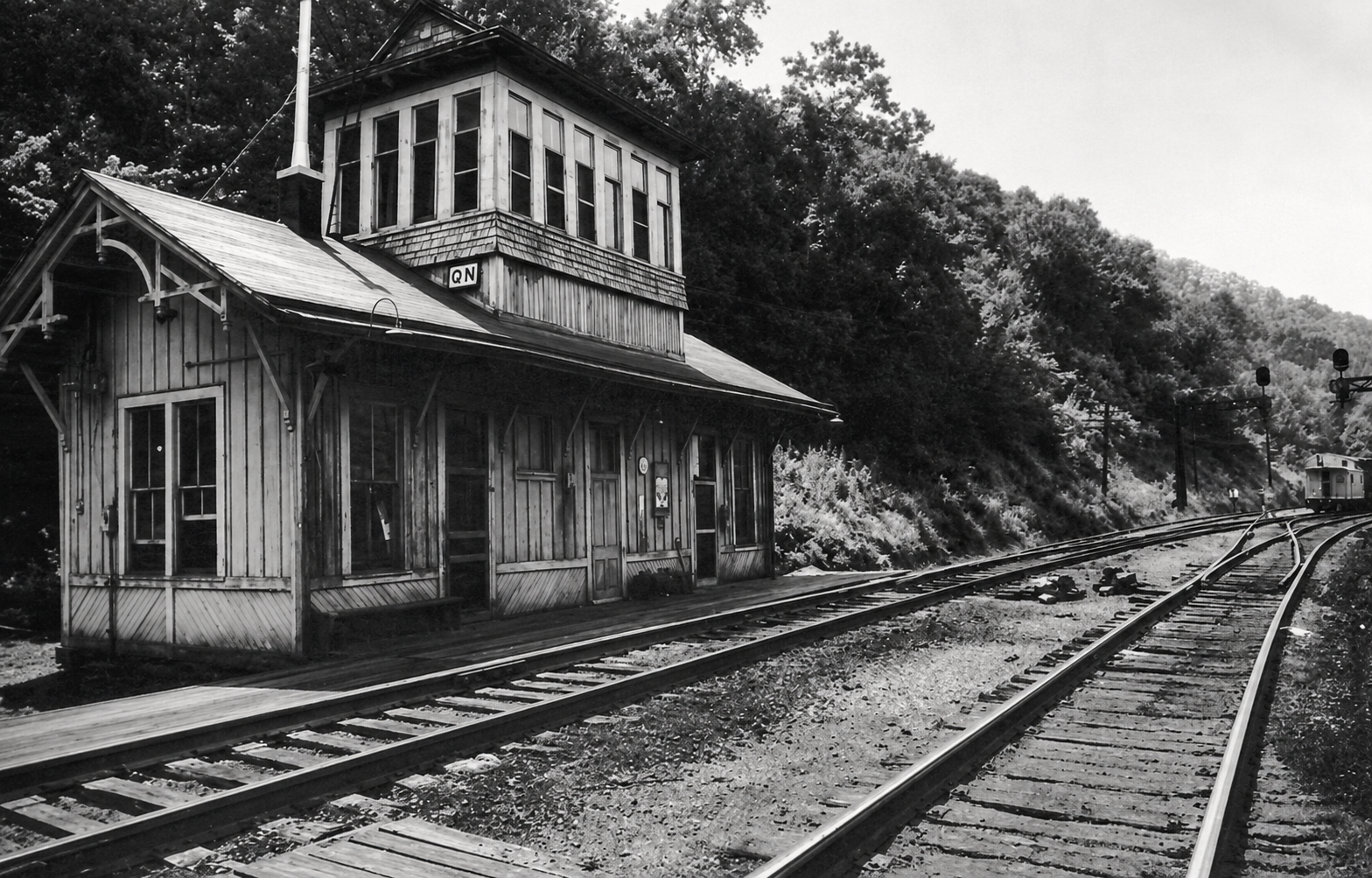
When the boarding house burned, they lost all their possessions; Minnie said she learned a lesson to never lend importance to matrial things. The only way to get to the big house at Round Bottom from McKendree was via rowboat across New River. They lived there until 1927 when they moved to Quinnimont where he began work as a telegraph operator (img: Quinnimont_Tower.png). At Quinnimont, Leonard was an active member of the Baptist Church and served as superintendent of the Sunday School.
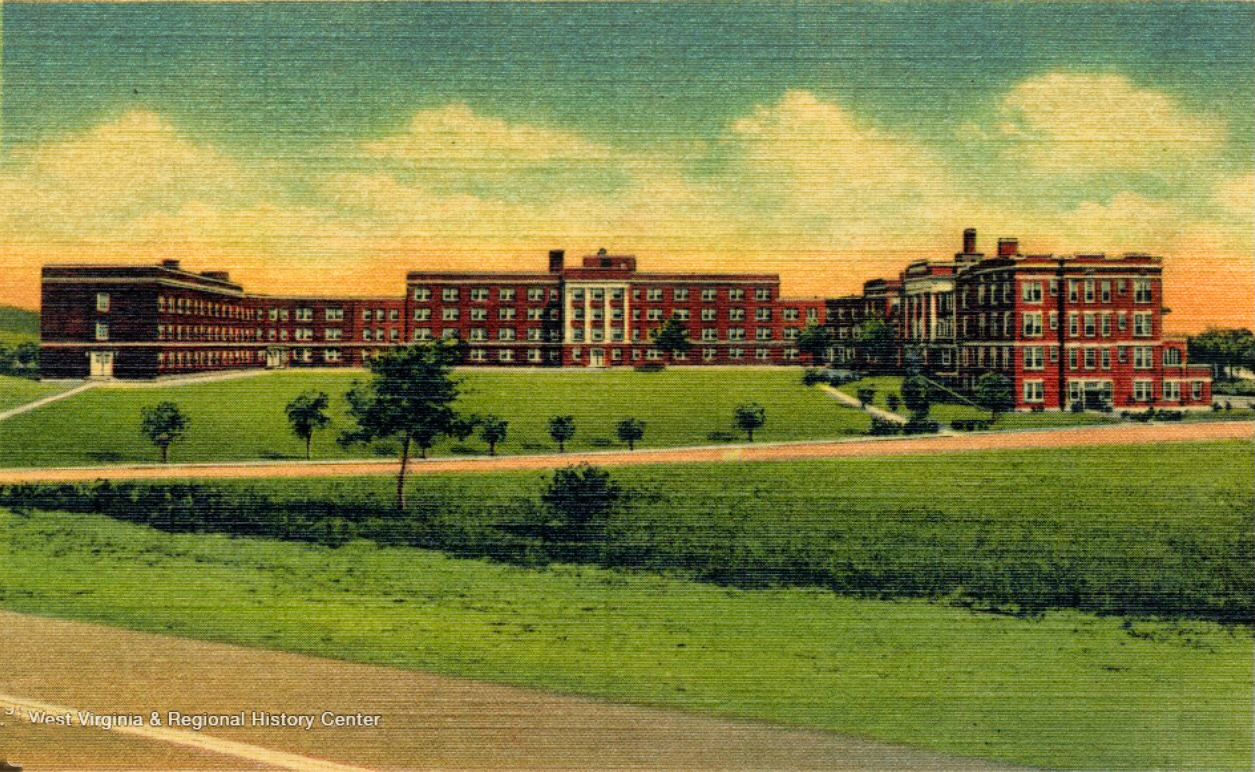
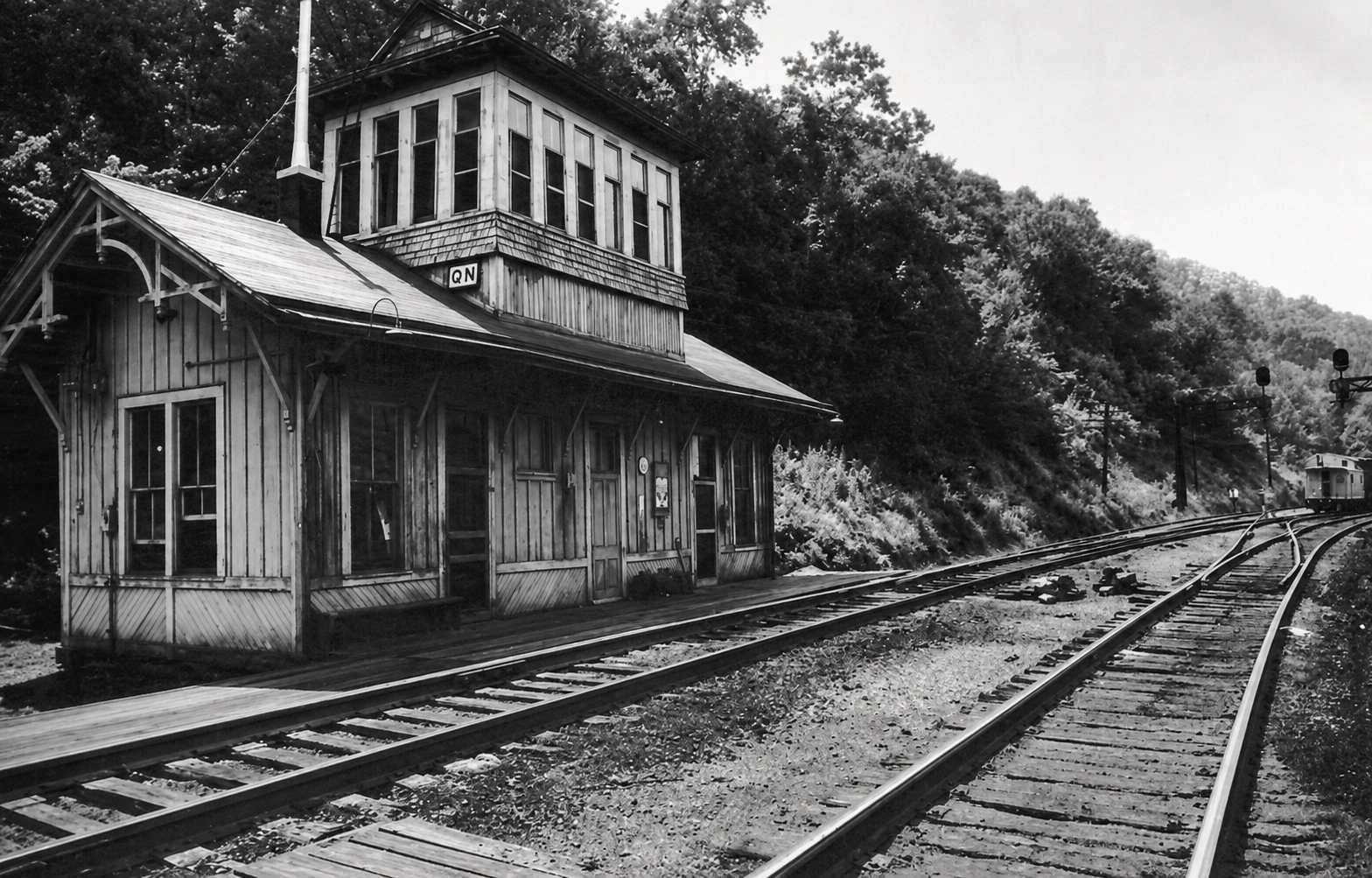
When the Depression hit, C&O job cutbacks sent dad to Charleston where he found work at the Carbide and Carbon chemical plant where his brother Laban worked. The family lived in South Charleston for about three years untill the C&O notified dad that he must return to his job or lose his seniority and retirement. Being a railroad man at heart, he returned and was assigned to the station in Hinton, but his career was interrupted by a diagnosis of tuberculosis. He entered the Pinecrest Sanitarium at Beckley in October 1938 where he remained until the end of 1939. While at Pinecrest, he kept a dairy that Leona transcribed. I recently scanned a printed copy of that diary into a PDF [8]. Reading his diary has given me a much clearer picture of who my dad was and I now feel much closer to him. Like my mother, he was a devout Christian who had devoted substantial time and effort into their church. However, the long year interred at Pinecrest gave him more than ample time to evaluate his relationship with God and he, perhaps not unsurprisingly, appears to have come to conclusions very similar to my own.
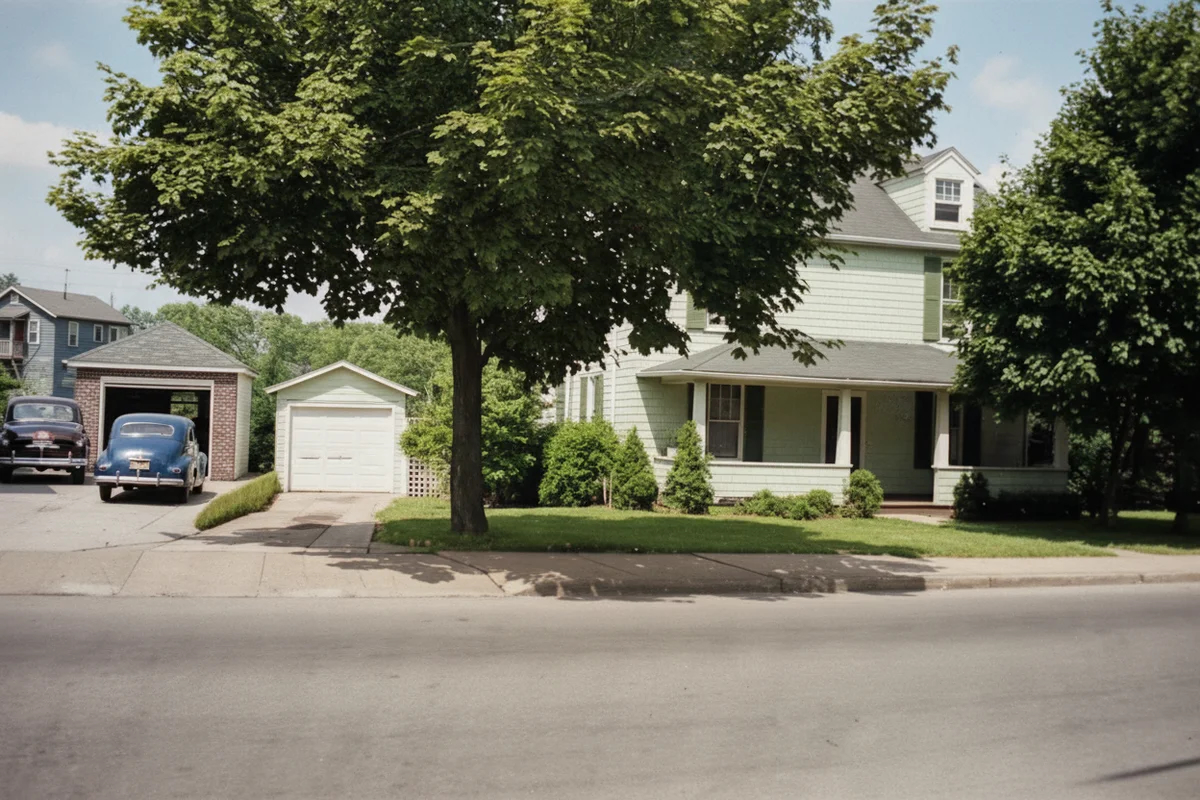
He recovered well enough to return to work in 1940, was promoted to dispatcher and became involved with the American Train Dispatcher's Association where he served as Vice General Chairman of the C&O System Committee. He moved to Beckley, WV with a position of Chief Dispatcher at the Raleigh Depot. They lived in a house on Mabscott hill for a short while, moved to a place on Virginia Street, then to a better house on Queen Street, where they were when the Japanese attacked Pearl Harbor on 7 December 1941. I was born on August 27, 1942 in the house at 117 Queen St. and was one year old when we moved to North Kanawha St. I have vague memories of visiting Dad at his workplace in Raleigh. I also remember him eating "grass sandwiches" which were thought by his doctors to provide nutrients that would help with the TB. He would take a pair of scissors and harvest some tall, green grass from the hill behind our house, then smush it up good and spread it between two slices of bread. It took discipline and motivation to eat those sandwiches.
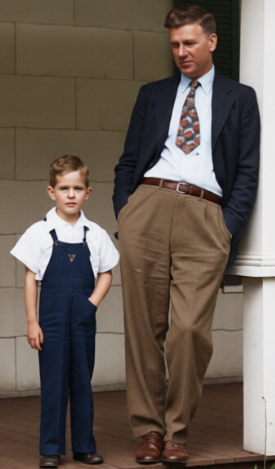
My sharpest memory of him was the day of a surprise birthday party. Mom planned a surprise party for what was probably my 7th birthday, inviting several of my neighborhood friends to attend. In order to make it a surprise, dad took me for a walk. I remember walking around the neighborhood with him and ending up along the C&O tracks from Sprague to the point behind our property where we sat down and peered over the valley below (Valley Drive). I remember that walk well, but have no recollection of the surprise party. Dad had a nice workshop under the garage. There was a long workbench with shelves on the wall above it and a long row of small bottles containing hardware (screws, nute, bolts, etc.) hanging underneath the shelves. He fastened the lids under the shelves for easy removel and replacement. Dad did some substantial landscaping on the hill and constructed an outdoor "sink" out of rock with running water from a faucet assembly. He was an accomplished carpenter and jack of several trades.
I was extremely fortunate to have been born into a close-knit and loving family. The loss of my dad when I was eight years old was compensated by a strong mother and my oldest brother, Marshall, who stepped into Dad's shoes when discipline was needed. My sister, Leona, became a school teacher. My brother Joel became a physics professor. Marshall retired after a long career with the C&O railroad. All three were positive influences. I won't write nuch about my childhood here because the focus of this book is the Gwinn Ancestry. My life story is documented in a memoir [9].
Leona Gwinn:
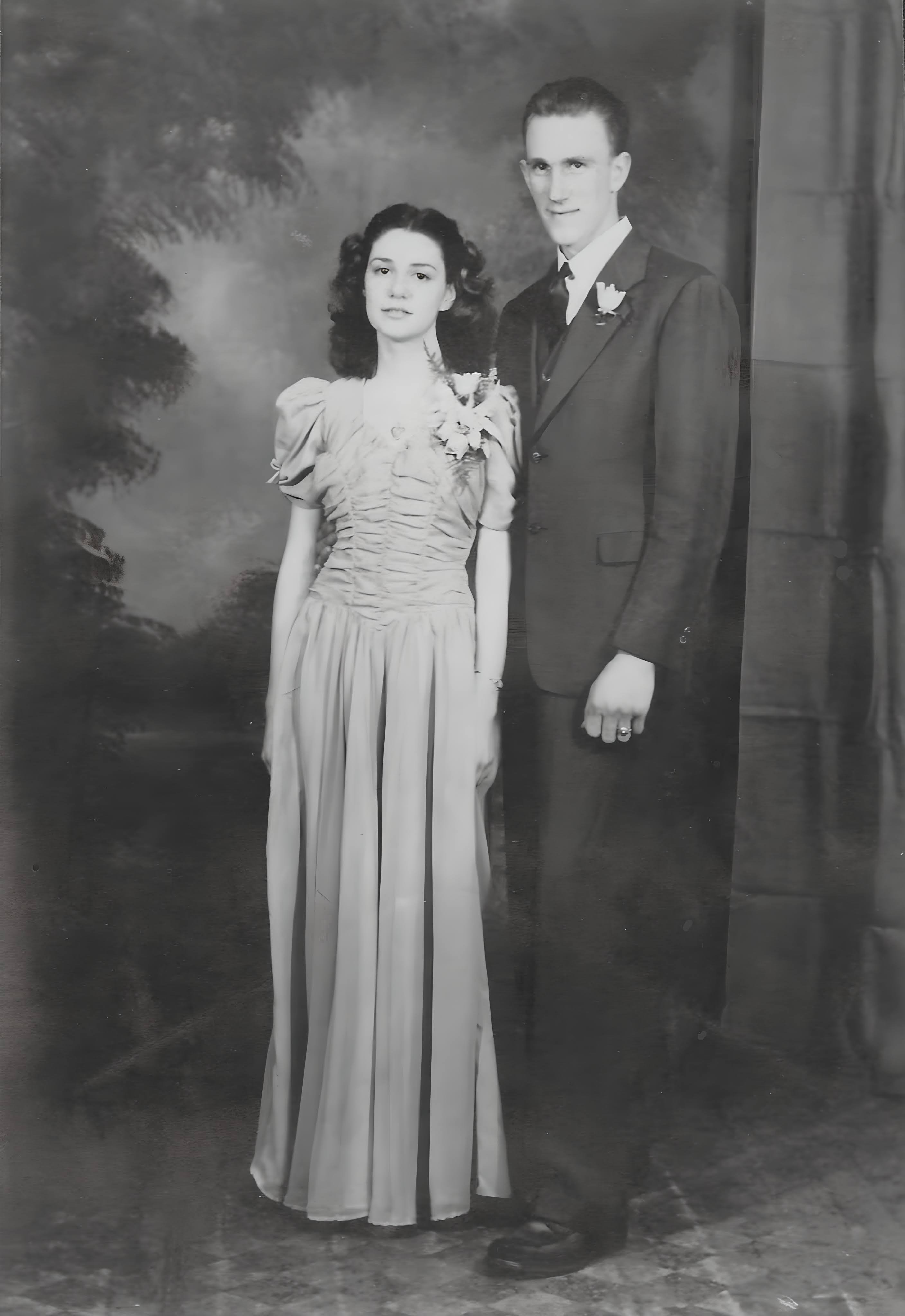
My sister Leona was the oldest of my siblings. She was still in highschool when the Japanese attacked Pearl Harbor on December 7th, 1941 which just happened to be her 17th birthday. She married Howard Brown in February 1943 when I was only a few months old. Howard was a private in the U.S. Army at the time of their wedding and returned to Fort Thomas, Kentucy the day after. Leona then started school at Alderson Broaddus in Phillipi, WV. I remember visiting her in Phillipi and listening to her play the piano, but have no other memories of her until she and Howard were in Morgantown after the War. When Howard enlisted, he was selected for the Army's Specialized Training Program which was formed to to meet wartime demands both for junior officers and soldiers with technical skills. Conducted at 227 American universities, it offered training in such fields as engineering, foreign languages, and medicine. [14] He was just beginning flight training at Iowas State Teacher's College when there was an emergency call for infantry reinforcements, necessitating withdrawal from ASTP. [15] He was assigned to the 97th Infantry Division, 303rd Regiment, 2nd Battalion, Company H, 6th Squad. His unit was sent to Camp San Luis
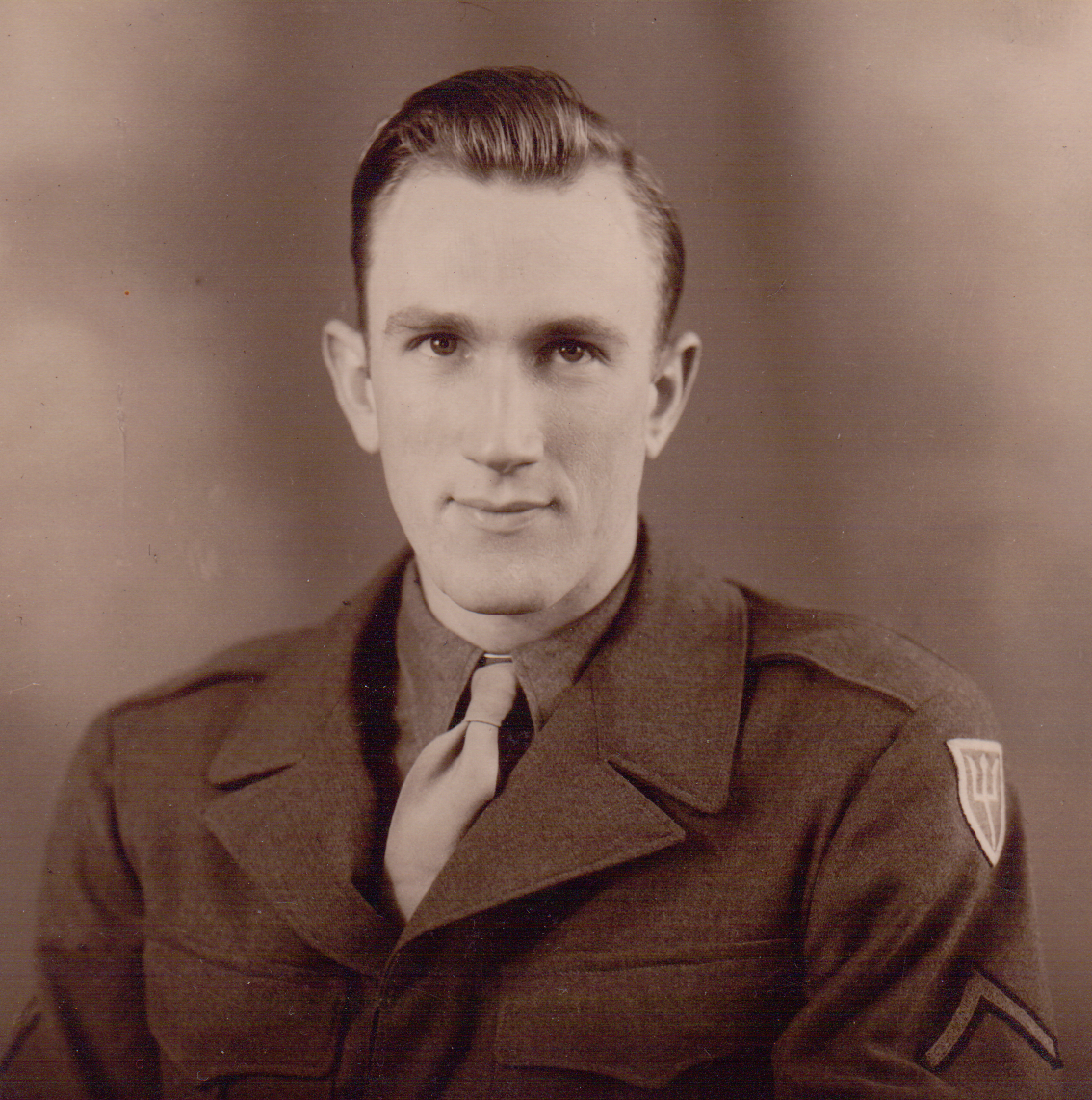
Obispo, California for amphibious landing training in preparation for the invasion of Japan, but then re-routed to Germany. According to the history of the 97th, it was sent to Europe instead of the Pacific because of the high loss of US military during the Battle of the Bulge (December 16, 1944 – January 25, 1945. The 97th landed at camp Lucky Strike near LeHavre, France on March 2nd 1945, fought their way to Czechoslovakia, and were liberating concentration camps west of Pilsen when Germany surrendered. Howard's 6th squad was an 81mm mortar squad. They would typically fire a volley of nine shells at three different ranges. According to Howard, his squad was able to put all nine shells in the air before the first one landed. The 97th returned home in June 1945, then sailed to Yokohama, Japan in August for occupation duty. My memory is foggy, but I recall visiting Howard and Leona in Morgantown, probably in 1946 or 47 when both of them were attending West Virginia University. They had a dog, a Collie if my memory serves me right, and I have visions of them giving the dog a bath in a laundry room sink near their trailer. The university had set up a trailer park to accomodate many married veterans who were taking advantage of the benefits offered by the GI Bill. Circa 1948,they returned to Beckley, bought property on Cresent Road, and built a house there. I must have been six or seven years old; I remember Howard clearing trees from the property. He cut the trees down, then used dynamite to remove the stumps. There was a large, thick, heavy rope mat that he laid over the stump after planting the dynamite. The explosions made an indelible mark on my memory. I have more memories of Crescent Road from later years, of Howard digging out their basement and planting a large garden. I also remember construction of the West Virginia Turnpike in 1952, a segment of which was within a short walk of their property. Their son Tom was born in 1949. There are several old photos from the years they lived on Crescent Road.
Howard was a character, in a good way; I looked forward to his visits. Mom always had a “to-do" list for Howard, who was a Jack of many trades (auto mechanic, carpenter, electrician, plumber, etc.). We were visiting them on Crescent Road when the news came that my dad died during surgery. I loved the visits Mom and I made to Piney View because the Brown property was much larger and more fascinating than our place in the city. Howard's mom & dad had a beautiful farm with a big barn and animals. They were basically self-sufficient and also ran a small country store where I always looked forward to a "bottle of pop" and a candy bar. Grandma Brown cooked the most delicious food; her chicken n' dumplings was my favorite. When mom made dumplings, they were the big fluffy kind. I often asked her, "Why can't you make good 'soggy' dumplings like Mrs. Brown?"
Howard returned to West Virginia University to pursue a degree, so they moved to Morgantown. I have vivid memories of visiting them there, one standout being the time Howard taught me to water ski on Cheat Lake. After that experience, I was hooked and later went water skiing often with my high school friends at Flat Top Lake. After graduating, Howard took a job at the National Radio Astronomy Observatory in Green Bank, WV (img: Green_Bank_Radio_Telescopes.jpg). They rented for a short while, then Howard built another house where they lived until he retired. We very much enjoyed visiting Green Bank, a beautiful place in a picturesque valley surrounded by mountains. Leona taught school (grades 1-6) for most of the years they were in Green Bank. I visited Green Bank while home on leave from the Air Force and borrowed one of Howard's cars to drive to Phillipi and visit my wife-to-be, Shelia Jackson, who was a student at Alderson Broaddus College. It was during these years and later, after I retired from the Air Force, that I really came to know Howard, Leona and my nephew Tom.
Marshall Gwinn:
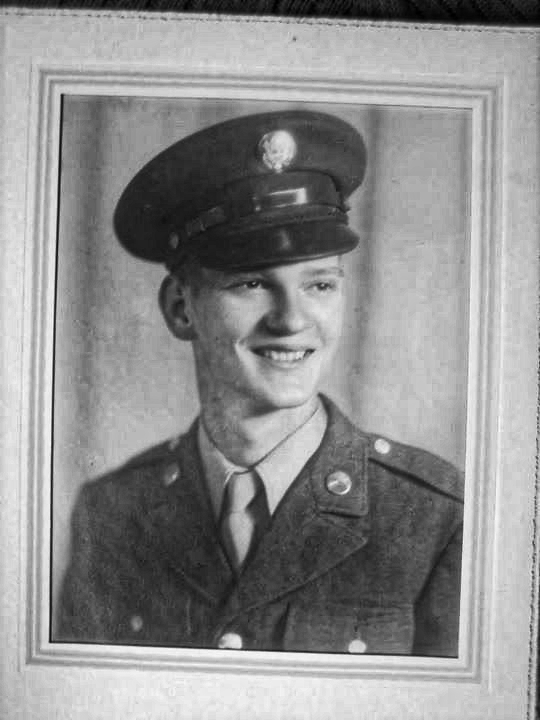
Marshall (img: Marshall_Gwinn_WWII.jpg) fought in Germany during WW II, assigned to B Troop, 121st Cavalry Reconnaissance Squadron called "The Bird Dogs." He never talked much about his experiences in Germany, but he did write one short story titled "The End." [10] He trained at Camp Blanding, near Starke, Florida. When he returned from Germany, he was posted at Fort Riley, Kansas. I have a sharp memory of Marshall hitch-hiking home to West Virginia on a 3-day pass. I was just a toddler and was excited to see him, but he was so worn out from the trip that all he wanted to do was sleep. My toddler name for him was "Marsha Bo." When older, I often accompanied Marshall to his work at Quinnimont, spending the day swimming, tubing, and fishing in New River. Sometimes he would let me throw the switches and, at least once, I held up the bamboo 'Y' with a message for a passing train, a thrilling experience for a youngster.
Marshall was intelligent and well read. He had a set of World Book Encyclopedia and I think he read every volume multiple times, cover to cover. He was also very much into music. All of Leonard Gwinn's sons inherited the music gene. Dad had a large collection of 78 rpm records that he played on a console radio / record player in the living room. There were several Stephen Foster records with songs like Beautiful Dreamer, Camptown Races, Jeannie With The Light Brown Hair, Oh Suzanna, and My Old Kentucky Home. He also had a lot of big band records with musicians like Tommy Dorsey and Benny Goodman, plus some very eclectic music like Spike Jones. People used to tease him about his Spike Jones records. Marshall not only appreciated music and played bass horn in the Woodrow Wilson High School band, but he also wrote music. He was a big fan of marching music and wrote some original scores, none of which were ever published, as far as I know. Joel followed Marshall in the band and I followed Joel, all of us taught by Mr. Glen Salack.
Joel Gwinn:
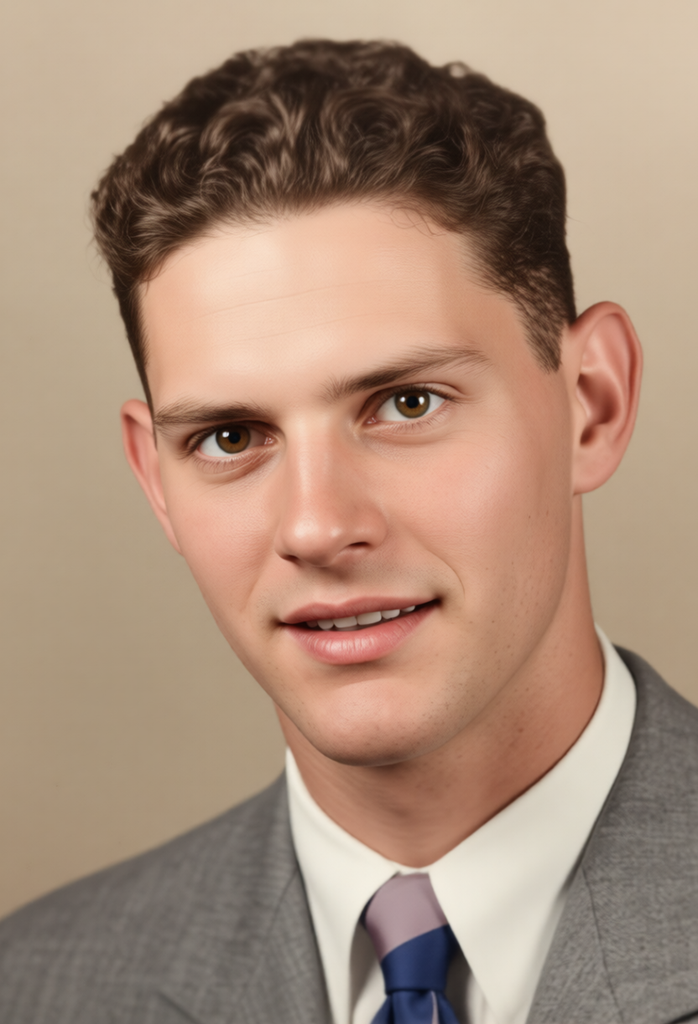
Uncle Asa & Aunt Elsie:
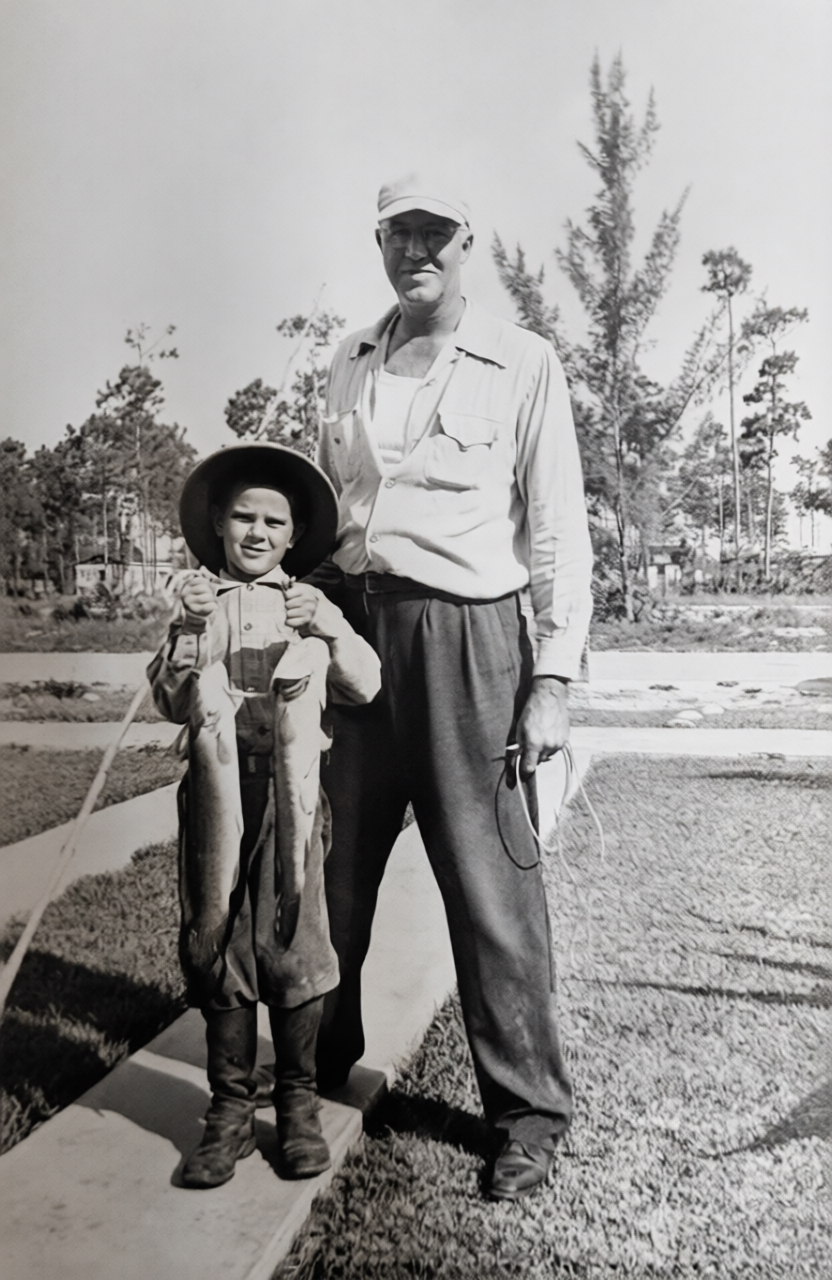
I had 11 Uncles and Aunts, children of Grandfather Loomis. Of those 11, I was closest to Asa and Elsie and loved them both dearly. Elsie was my dad's sister, the dearest, most loving woman imaginable. Uncle Asa Godbey (familiarly known as "Ace") was a character with a capital 'C'. He lost one of his legs just below the knee in a West Virginia mine accident. I don't have details, but Ace was rumored to have run moonshine during prohibition. In the mid 1940s, he and Elsie moved to Coral Gables, Florida where Ace opened an artificial limb shop. When my dad was struggling with Tuberculosis, the doctors suggested that spending some time in Florida breathing fresh ocean air might be beneficial, so he and mom, with me in tow, drove to Coral Gables and lived with Ace and Elsie for a while. I attended third grade there. Uncle Ace took me on many fishing trips, some to the Gulf Coast near Everglade City where we caught many redfish and grouper.
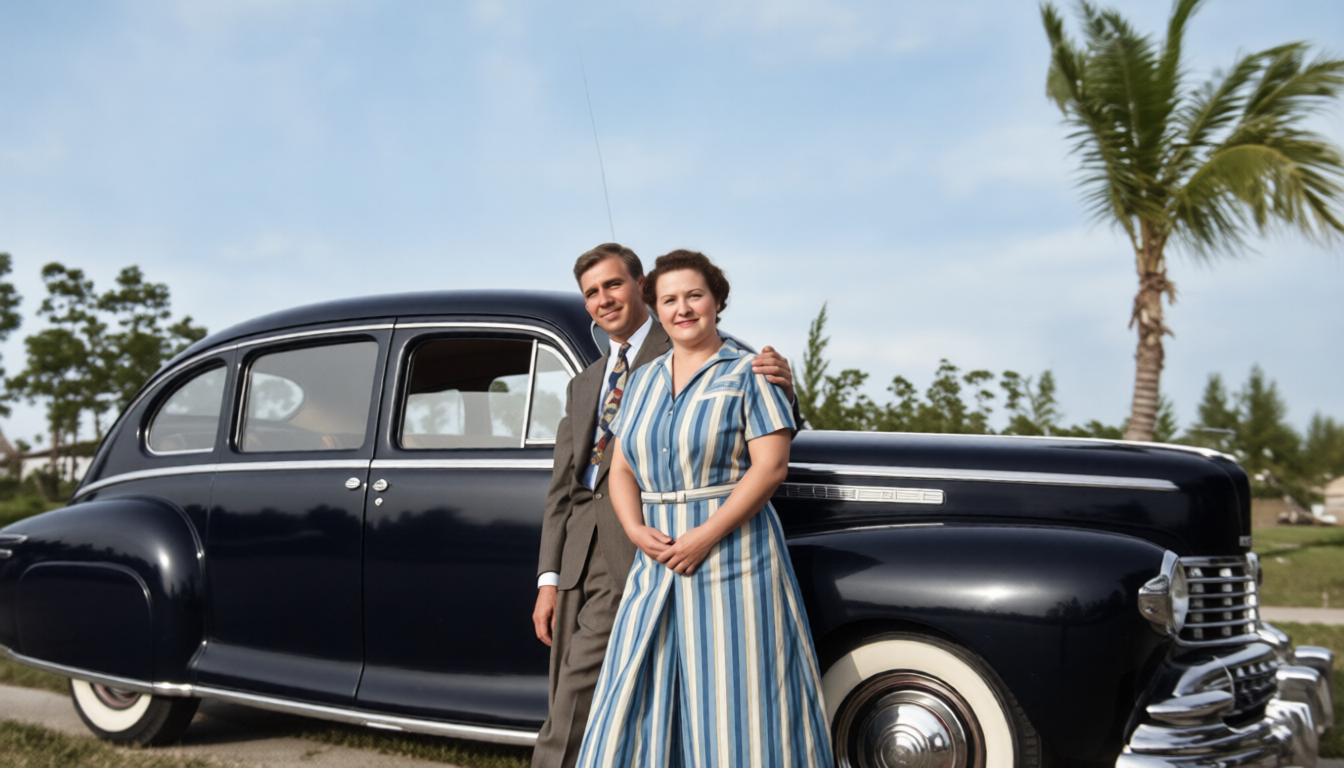
Ace was a flamboyant somebody who swore like a pirate but had a heart of gold. He treated me like his own son Corki who was several years older. I'll never forget Corki taking me with him to the venerable Venetian pool. Corki became a doctor of Psychology and had a distinguished career in the Navy. As I write this, he is retired and living in Gainesville, Florida. Brenda and I visited him there twice in recent years (2023-2024). In another small world story, Corki bought the Round Bottom property which had sold many years ago for pennies. In December 2020, New River Gorge National Park was created. The new park now encompasses the Round Bottom property. Ace and Elsie later moved to DeLand, Florida. In 1968, Shelia, Charlie and I visited them in DeLand and Ace took us fishing for perch in the St. Johns river.
Then there was uncle Carl who, like dad, worked for the C&O railroad. Carl was born November 24, 1894 and grew up with his brothers and sisters at Round Bottom. According to a story by Roy C. Long published in the Hinton, WV News [11], he and his neighbor, Silas Kincaid, strung a wire between their houses, made storage batteries from copper, lead and copper sulfate, then taught each other Morse Code. The code came easy to Carl and he began work as a telegraph operator at Hinton April 16, 1916. He enlisted in the Army May 25, 1918 and served with Company B, 108th Field Signal Corps in France and Luxembourg during WWI. He was in the battles of Verdun and the Aragon Forest and received a decoration for his role at Verdun. Carl and Mary had a nice house on Main St. in Hinton. His hobby was woodworking and he had an impressive shop in the basement. Carl made much of their furniture including the most beautiful lamps. Carl & Mary also had a camp on the Greenbriar river, upriver from Hinton, near Alderson. Mom and I visited Carl & Mary in Hinton often and sometimes accompanied them to their camp where I would swim and go fishing. An interesting anecdote: ~1990, my wife Shelia and I belonged to the golf clubs on Fort Meade, Maryland. We learned that one of Shelia's playing partners, Margie Peterson, was from Hinton, WV and was honored as "Miss Bobcat" her senior year. The Hinton high school sport teams were Bobcats. In casual conversation with Margie, we discovered that she and her mother came to Hinton in less-than-ideal circumstances. They had little to no money and no place to stay. My uncle Carl and aunt Mary took them in and helped them get on their feet - a wonderful "small world" story.