What Y-DNA Actually Tests
Y-DNA follows the direct male line:
father → son → son → son
Since surnames in the British Isles also usually followed the paternal line, Y-DNA is extremely useful for surname studies such as Gwinn, Gwin, or Guin.
If fourteen documented male descendants of Robert Gwinn all tested positive for R-M222, that strongly suggests:
- they truly descend from the same paternal ancestor, and
- the Gwinn paternal line originated in northwestern Ireland.
What Is R-M222?
R-M222 is a subclade of the larger R1b haplogroup.
It is especially concentrated in:
- Donegal
- Derry
- Tyrone
- Inishowen
- northwestern Ulster generally
It is frequently called the:
- Northwest Irish Modal Haplotype
- Ui Néill Marker
This is because it appears at unusually high frequency among families traditionally associated with the Ui Néill dynastic sphere.
Who Were the Ui Néill?
The Ui Néill (“descendants of Niall”) were among the most powerful ruling dynasties in early medieval Ireland.
Tradition traces them back to Niall of the Nine Hostages, a semi-legendary High King of Ireland.
Whether that genealogy is literally true is debated, but the dynasty itself was unquestionably real and historically dominant.
Branches of the Ui Néill ruled large parts of:
- Donegal
- Tyrone
- Derry
- parts of Meath
for centuries.
The Kingdom of Aileach
The reference to the “Kingdom of Aileach” is both geographic and dynastic.
Aileach was an early medieval kingdom occupying much of modern:
- Inishowen
- eastern Donegal
- northern Derry
Its ceremonial center was the Grianan of Aileach, a remarkable circular stone hillfort overlooking the surrounding countryside.
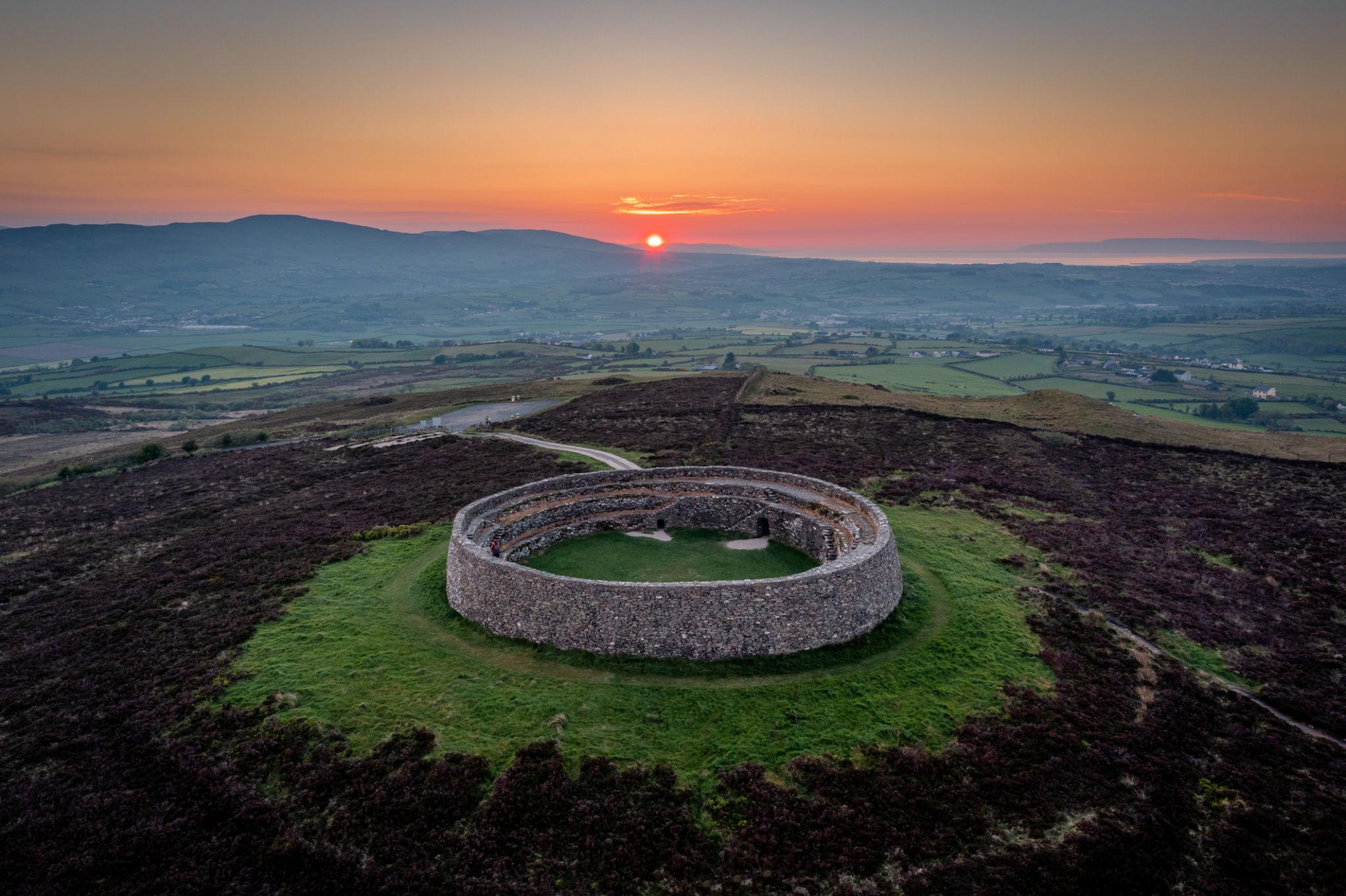
Grianan of Aileach, a historic stone ringfort located on Greenan Mountain in County Donegal, Ireland.
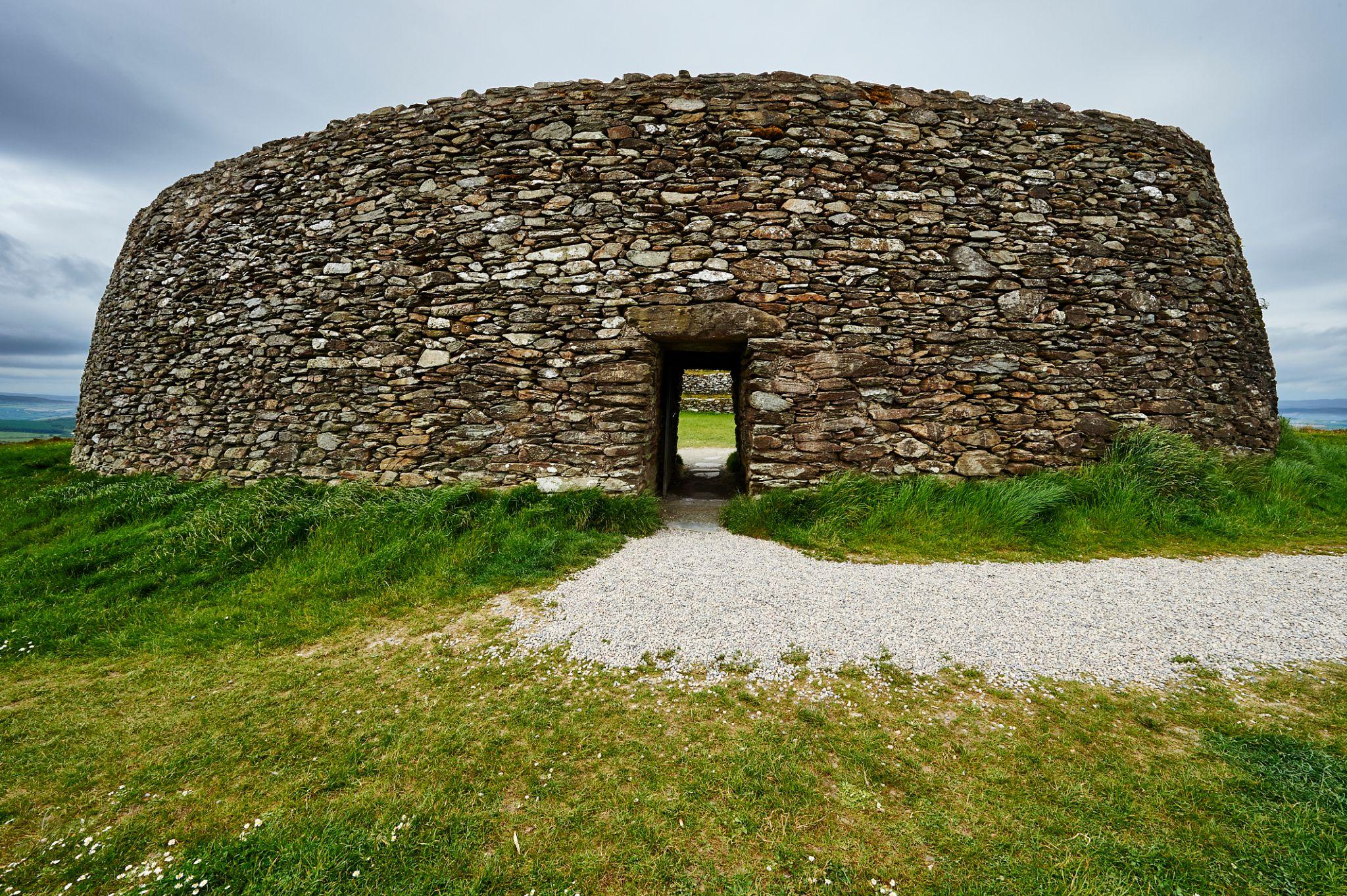
This is precisely the same region associated with:
- the Laggan Valley,
- James Patton’s recruitment network, and
- the concentration of R-M222 families.
What This Does — and Does Not — Prove
The DNA evidence does not prove direct descent from Irish kings.
What it does strongly support is:
- deep paternal ancestry in northwestern Ireland,
- probable association with the broader Ui Néill population sphere, and
- strong geographic ties to Donegal and Derry.
That aligns remarkably well with:
- the Patton migration evidence,
- the Laggan Valley recruitment patterns,
- the 1740 Protestant Householders Returns, and
- the Ulster Presbyterian settlement network.
In other words, the documentary and genetic evidence point in the same direction.
The Historical Timeline of the Ui Néill Dynasty
The Ui Néill dynasty emerged during the late Roman and early post-Roman period in Ireland and remained politically dominant for roughly a thousand years.
Simplified Timeline
- Traditional founding: late 4th or early 5th century
- Peak political dominance: approximately 500–1100 AD
- Regional survival of branches: into the 1500s and early 1600s
The dynasty is traditionally traced to Niall of the Nine Hostages.
By the 500s, the Ui Néill confederation had become one of the dominant political powers in Ireland.
The Two Main Branches
Northern Ui Néill
Centered in:
- Donegal
- Tyrone
- Derry
These are the branches most relevant to the Gwinn research.
Major northern groups included:
- Cenél Conaill
- Cenél nEógain
The Kingdom of Aileach belonged to this northern sphere.
Southern Ui Néill
Centered more toward:
- Meath
- central Ireland
These branches produced many later High Kings of Ireland.
Later Historical Importance
For centuries the Ui Néill were among the dominant political forces in northern Ireland.
They:
- fought Viking incursions,
- contested rival Irish kingdoms,
- supplied numerous High Kings, and
- controlled important ecclesiastical centers.
Their influence extended well into the Norman and Tudor periods.
One famous later descendant line was that of Hugh O'Neill, Earl of Tyrone, who led resistance against English rule during the Nine Years' War (1593–1603).
Why This Matters for the Gwinn Family
The significance is not necessarily royal descent.
Rather, the evidence suggests that the Gwinn paternal line belonged to the ancient population base of northwestern Ireland long before:
- the Plantation of Ulster,
- the rise of Presbyterianism, or
- the Scots-Irish migration to America.
The likely historical sequence looks something like this:
- Ancient Gaelic northwest Irish ancestry
- Integration into Ulster Scots and Presbyterian culture
- Migration through James Patton’s settlement network
- Frontier settlement in colonial Virginia after 1738
That sequence represents a classic Scots-Irish frontier story — but one supported by unusually strong geographic and genetic coherence.